Bodleian Library at Oxford University

(dcs.shef.ac.uk)

On Thursday, July 23, we took the national train to the city of Oxford in order to visit Bodleian Library at Oxford University. Our tour guide, Rita was from Rome and she gave us a thorough talk on the history of the Bodleian Library. Since Oxford university was established in a time where there were strong unions between the state, the church and the university, the imagery in the building reflects the connection. Construction on the Bodleian library began in 1427 in the Gothic style, but as the funding began to wane in 1440, the style became more plain. William Orchard was the architect of the library (his initials are in the ceiling) and the project was complete in 1488.


Our tour took us through several levels of the library and down through the closed stacks and the underground passage way that library workers used to transport books from one section to another. We saw the old fashioned, and no longer working conveyor belt that the staff used to use to move books as well. Rita confessed that she had actually gotten a tour group locked in an underground passage so she was being extra careful with us. I never really got my bearings in the Bodleian Library because it is so big and the structure is a lot like a maze.

Thomas Bodley was a fairly resourceful fellow. According to Rita, he would host big, fancy parties and entertain the wealthy people in the area. Apparently, he was schmoozing them in order to get them to agree to donate their collections to the library, after they passed. This seems like a smart way to guarantee the growth of your library's collection. He also mandated that the books be chained to the shelves and put away with the spine facing the wall, and make the patrons pay to use the card catalog. This would ensure that no one was getting their knowledge for free. I believe that the library administration has moved away from these tactics in the past 500 years, but it is interesting to learn the origins of the collection.

Being on the campus of Oxford University was a pretty humbling experience. As an admissions counselor, I talk about The University of Arizona being the oldest university in the state, founded in 1885, we have nothing on Oxford. I can only imagine the wars, monarchs, and economic hardships that the university has faced throughout its existence. Many say that time is the best test on the quality of various things, if this is the case than Oxford is a force to be reckoned with.

Victoria and Albert Museum


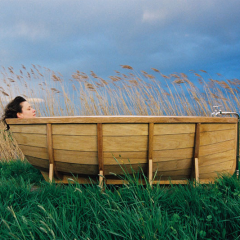
On Wednesday, July 22nd, our class visited the Victoria and Albert Museum which is also refered to as the National Art Library. I was actually late to this library visit, so I heard a little bit about its collection, and I was able to see special peices that were shown to us in small groups. The Victoria and Albert Museum has been called the world's greatest museum of art and design. This was my favorite museum because it didn't seem to have any boundaries on where art could be created. It moves beyond paintings and scultures and into a realm of fashion, architecture, and furniture. I took a very close look at one of the current exhibit, Telling Tales: Fantasy and Fear in Contemporary Design.This exhibit originated in The Netherlands and it features artists under the age of 40 trying to imbue classic storytelling into their creative peices of furniture, lighting and ceramics. The exhibit space moves from a forest glade to an enchanted castle and ends in an interpretive "heaven and hell" atmosphere. There were all kinds of clever items that invoked irony or a funny play on words. There was a sensory deprivation chair that was shaped like a skull, making it a place to "get inside your head". There was a bathtub that was shaped like a boat, in this case a boat that is design to keep water in. I also saw the Fig Leaf Wardrobe that was designed to hold Adam and Eve's clothes with a caption that read that "the wardrobe becomes dressed when the user is not". Lastly, I had to smile when I saw the pillow cushions shaped like atomic explosions and the caption read, "embrace your fears". This is my version of smart art, the artists came up with something unique and observers like me could follow their lines of reasoning. I could not take pictures in the exhibit, but a quick image search of the exhibit, led me to the fig leaf wardrobe ( http://www.designophy.com/uploadedimages/tmn/2009/07/16/designophy_com_b3_1000000104_102.jpgand the bathboat (http://www.detnk.com/files/images/Picture%2017_22.thumbnail.png). The main posters that I saw advertising this exhibit showed a taxidermy fox with maggots coming out of its ears, the meaning of which still escapes me. One of the contributers to this collection, Wieki Somers, said that decadence is when [the lines between] tasty and unsavory, harmful and delightful are no longer discernible. I think that is an awesome definition. It's like a big peice of choclate cake that starts off tasting good, and after you've had a little bit it starts to give you a stomachache and you can't eat anymore. When we've hit decadence we've gone too far. I could go this museum many times and still not see everything that was of interest to me, hence it is the subject of one of my extra entries in this blog.

British Museum


On Tuesday, July 21, our class took "The Tube" to the world famous British Museum. A person could literally get lost in time and space in the British Museum. I was glad that we did not have an official tour and we were free to explore our own interests in this great museum. This blog will incorporate some of the things I saw, and how I was able to connect them to the experiences that I have had thus far in life.

I began my journey with the artifacts from ancient Greece. The Greek pottery was preserved in pristine condition, with the figures and colors easily identified. One of the stone sphinxes actually has traces of the deep red pigment that it had hundreds of years ago. The artifacts reminded me of the animations from Disney's Hercules, which is one of my favorite animated Disney movies.


There were many Grecian artifacts that displayed the human form, especially the balance and proportions of the male figure. One of my favorite sets of statues were the Three Nereids or sea nymphs because the sculptures were so beautiful. These pieces were so detailed that I could see the thin water or wind swept clothes that adorned the bodies of the goddesses.

I also spent time in the ancient Egyptian exhibit, especially being that close to hieroglyphics. The writing on King Ramses II's arm reminds me of the tattoos that many of my peers are getting. Speaking of tattoos, I have a small ankh on my back, and it was moving to see that symbol used to express thoughts thousands of years ago.

Finally, I fought through the crowds to get a good look at the Rosetta Stone. Before this trip, I knew more about the Rosetta Stone has a commercial device to aid in language acquisition, but now I know better. This stone which was acquired by the British Museum in 1802 allows us to understand the past in its own words. I am impressed by the sophistication of early civilizations and I am glad that the British Museum is taking such good care of this international treasure.

Although many of the artifacts were intact at the British Museum, other pieces were in fragments, with the accompanying pieces in other museums in places like Copenhagen, Wurzberg, and Athens. For example, one of the legs from an Apollo statue is at The Lourve in France. Another consequence of broken artifacts is that the curators could not definitively state what the figures were depicting. The British Museum is the perfect example of how decisions to preserve materials and educate the public can be very controversial.

Before I came to London, my colleagues in library school were telling me how evil the English empire was for stealing from its colonies and never returning the loot, and I was anxious to see how the British Library would frame its position. As a museum patron, I walked through the ancient Greece portion of the museum, and at the end there is a hallway that explains the controversy and why the museum feels justified. The British Museum paints Lord Elgin as an important figure who spared the pieces from pollution, weathering and vandalism.


The explanation also says that Elgin also connected Grecian society to other ancient societies in the context of the museum. Lastly, it is impossible to return the materials to their original state, so they are ultimately better off in the British Museum. Although I was happy to see these artifacts in one pristine and inclusive exhibit, I do think that the only context that really matters for these pieces is the original context. As Grecian people are piecing their legacy together, I believe that they should have control over the artifacts that their ancestors created. I know that returning artifacts to their original owners would unleash a brand new set of concerns, but that is my stance as an emerging librarian.

Greenwich National Maritime Museum Library


On Monday, July 20, our class took a boat down the River Thames to the Greenwich National Maritime Museum Library (http://www.nmm.ac.uk/visit/). We spoke with Hannah, the archive and manuscript librarian, who shared a lot of useful information with us. It makes sense that this library would be in existence since 1937, in a country with such a strong sea presence. The library has public funding as well as private. The entrance to the reading room is a rotunda, named after the founder of the library, whose donations provided the basis of the collection, Sir James Caird.

The use of this library is free to the general public, but the users do have to be over the age of 16.The library boasts over 8,00o items in the Rare Books collection and the largest collection of navigational charts and maps. People utilize this library for information on immigration, genealogy, navigation, piracy, astronomy, voyages, exploration, Merchant and Royal Navy, as well as naval architecture. This library has 3,000 to 4,000 visitors every year, and 16,000 to 18,000 virtual visitors who utilize the electronic library and online public access catalog (OPAC).
We also learned that the Maritime Library utilizes MARC and AACR2 cataloging standards that have been heavily adapted to suit their collection, they also in corporate archive and museum metadata standards This library used to be open 6 days per week, but now that it is undergoing massive renovations, it will only be open for 3 days out of the week. By 2011, or 2012 at the latest, the library should return to its regular operating hours, and it will be improved with a new reading room and enhanced storage facilities.


As other members of the library staff took time to show us some of the more unique pieces in the manuscript and rare book collection, some items really stuck out to me. The museum has an original signal book, a book that sailors use to describe all of the codes and flags that they use to communicate, this would have been thrown overboard in the event of a battle. If one was recovered by an enemy, the whole system would have to be re-invented. There were letters from the Lord Nelson as he was working to prevent a mutiny in 1757. There was written proof of how easily a privateer could be swayed toward piracy.


There are even carefully drawn maps that depict California as an island, which gives us a great idea of how these sailors viewed the world. One of the more remarkable pieces are Cree's journals which detail his experience with a narrative and water color illustrations. One of the librarians mused that life out in the sea left much to the imagination, there is nothing more to do than to write, draw and look into the sky. If such thoughtful and meaningful artifacts can result from this lifestyle, I think we should all give it a try sometime.


Shakespeare Library and Archive


On Friday, July 17, our class took a coach bus to Stratford Upon Avon to visit the William Shakespeare Centre Library and Archive (http://www.shakespeare.org.uk/). This collection was first established in the 1800's in conjunction with the public records office. In 1964, the building and the official mission to mold a library that would encompass William Shakespeare's life, work, and sources, was created. This library surprised me with its scope, although its focus is Shakespeare, it contains materials that Shakespeare might have referenced for his work including public records that illustrate the city happenings during his lifetime and the various interpretations of his work, from then until now.


The Royal Shakespeare Company has a performance and image database that can be accessed through this library. The public records aspect is a great resource for people who are trying to trace their family geneaology. This library is not publicly funded, its function is dependent on charity monies and donations from individuals. Although everyone is welcome to visit the library, some of the extremely old documents are off limits to most people unless they have proof that the access is neccessary for faculty approved research. Even with special access, no patrons may remove materials from the library, it is for reference only.


The library has 12 staff members, only 5 of them are full time, and it boasts about 50,000 books in its collection. The librarians are very passionate about what they do, and they make a point to share the treasures of their colelction with theatre students, school children and the general public as often as they can, with respect for the delicate nature of some materials.


One special piece of this collection is one of Shakespeare's first folios, which was printed in 1623, seven years after he died. There are only 230 of these still in existence of the 750 that were initially printed. The library also houses 250,000-350,000 photographs of sets, costumes, and actors. As we were touring the vault, we noticed some black and white still shots of Helen Mirren portraying Cleopatra in one of the RSC productions. Here is another image of Mirren in this role

(http://www.rsc.org.uk/picturesandexhibitions/images/from_xml/women/I_82_T884_97_c.jpg) The environment in the Shakespeare Library is very attuned to the pursposes of any given patron, one picture especially caught my attention. There is a painting of William Shakespeare between the muses, who are appropriately adorned and named, comedy and tragedy.

The British Library

On Thursday, July 16, our class took the "Tube" to the King's Crossing Station to visit the U.K.'s national library, named the British Library. The British Library is third in national library collection size behind the Lenin Library in Moscow and the Library of Congress in the United States. There are 2300 people on staff at the British Library and their task is to acquire everything published in England, preserve it and make it available to researchers. the library contains materials in every language in the world, and there is a librarian who is proficient in each of them.
The main British Library site in London is designed to look like a naval ship, cost 450 million pounds to build, and 36 years (1961-1997) to complete from inception to full function. There are 170 million items in the collection, and the number is constantly growing. It is estimated that if a person were to read 5 items per day, everyday, it would take him or her 80,000 years to get through the collection!

Since the majority of the library's collection is stored in stacks, 75 feet under the building, library patrons have to request materials and the staff members along with an intricate electronic system will retrieve the materials. To be eligible for a "Reader's Pass" one must submit the appropriate identification, a brief bibliography and explanation of what is being sought, as well as getting one's picture taken for the pass. The library has issued about 600,000 Reader's Passes since it opened in 1997, and there are about 114,000 "live" readers at the moment. There are 11 different reading rooms that are identified by subjects studied there for library patrons to take advantage of.

There are 50 mechanical book handling rooms throughout the library, which are all equipped with the automated book retrieval system (ABRS) that work with conveyor belts and optical scanning which move the materials from the stacks to the patrons. There are 22,000 possible routes that an item can go through with the ABRS, and the system is sophisticated enough to avoid any points of congestion in any given route. The British Library goes through a pretty standard acquitisiton process, except when it comes to the classification or shelving system. The librarians place the books by size, in order to conserve the most amount of space, since the book location is scanned as soon as it is entered, it is possible to retrieve a book about dogs, even if it is amidst Russian dictionaries. This system was designed by Antonio Panizzi, and it is a great example of making a decision based on an organization's specific needs, rather than generally accepted practices.

Some of the unique highlights of the library include the Glass Tower, the treasures of the British Library and the 400 year old Dutch Atlas on display. The prominently displayed Glass Tower are the shelves that contain 10,000 bibliographic items that King George III donated to the library for public use in 1820. The treasures of the British Library Johannes Gutenberg's first printed bible, the original copy of the Magna Carta and the Codex Sinaiticus, the oldest handwritten complete version of the Christian Bible, which is at leasat 1600 years old. The book of Dutch maps from the 1600's is about 5 feet tall and 3 feet wide and it locked in a glass case, it is a marvel to behold even in this restrictive state.


Our tour guide, Mr. Kevin Mehmet was wise enough to leave us to ponder the questions that are on the horizon for this institution and the profession as a whole. It is clear that the antiquated printed materials in the collection are still readable today, is the same true for some our recent digital publications? As we move into the digital age, how will we preserve the materials and protect the rights of the creators. By 2012, the British Library hopes to have 400,000 items digitized to increase access for its patrons. This also anticipates that paper publications will be significantly reduced by 2020. Although the increased digitization will inevitably change the way we think about managing data, the British Library, as shown by jam packed hallways and reading rooms, serves a function that seems to always be necessary.

Museum of London

On Wednesday, July 15, our class took the Tube to the Museum of London. There are about 400,000 people who visit the The Museum of London every year and it is best described as a place that displays the entire history of London. Right now, the museum only included exhibits from pre-history until the 1550's because the ground floor is being renovated.

Our tour guide, Jon Cotton, was one of the curators for the pre-history portion of the museum, and he was quick to point out that pre-history is more than the Romans, Saxons and Vikings, and it most certainly is not the times of the dinosaurs. Mr. Cotton encouraged us to think of the inhabitants of pre-historic London as intelligent and creative individuals who were able to survive in conditions that most of us could not even imagine.


The pre-history portion of the Museum of London is designed to make visitors think of four major elements, they are the Thames River, Climate, People, and Legacy. The Thames River is the reason that ancient and contemporary people flock to London, and it was represented by a blue lights glowing through the glass cases that held the pre-historic artifacts, many which were dredged from the river over time.

Climate change and the atmosphere were responsible for many of the population patterns in the London area, and the details were described in the exhibit captions. The concept of "ancient people as individuals" was illustrated by the human remains that were spatially grouped with objects that exemplified their individual trades or passions. There were humans who made weapons and tools out of flint and rocks as well as glass beads and various other items. The legacy was described as, "the history beneath our feet" and one example of it was the digital diorama which creatively depicts a pre-historic settlement that is now the site of Heathrow Airport.

Although the pre-historic portion of of the Museum of London was the focus of our lecture, there were many other exhibits available in the museum. I spent time wandering through the London as a Roman settlement exhibit, the Great Fire of 1666 exhibit, and the Plague and Medieval era exhibits. However, nothing could prepare me for the exhibit on Britain's involvement in the movement to end Apartheid in South Africa, during the late 1980's. There were posters that urged British citizens to boycott South African goods, not including South African cricket teams, and a large benefit concert in Wembley stadium featuring Stevie Wonder.


I read what South African and British scholars had to say about the daily degradation of living in such a system and the fury at the loss of the movement's leaders to false imprisonment, beatings and executions. There was even a video with headphones so that museum visitors could listen to a speech from Nelson Mandela, after he was released from prison in 1990. The impact of this exhibit was two fold for me. For one, I am amazed at what was happening in the world during my lifetime.


When we spend so much time learning about ancient history, we may forget how fresh many of the world's wounds truly are. Secondly, I am genuinely impressed by the international pressure that the United Kingdom was willing to put on a country for human rights violations, I don't see that type of resolve with the international human rights issues that we face today. I valued my visit to the museum because it enormously enhanced my learning, sitting in a classroom is one thing, but walking within, reading and talking about, listening to, and touching the material is quite another.