Library as Three Spaces
A defense of library spaces
LIS 588
September 15, 2009
Chaitra Powell
chaitra.powell@gmail.com
“The reality of the building does not consist in roof and walls but in the space within to be lived in”
Laotse
Library Parabola – a reading room in the British Library
Photography by Sifter Flickr.com
http://www.miragebookmark.ch/most-interesting-libraries.htm
Introduction
How does one describe that feeling we all get when we arrive in a space that was built with purpose? What about especially lofty purposes like capturing general knowledge, demonstrating naval prowess, showcasing art, preserving archives, or collecting Scottish poetry? Beautifully designed structures are a monument to collaboration, vision, and many skilled laborers. An architect cannot just design whatever comes to his mind, his ideas have to invoke what the keepers of the space have in mind. Christopher Wren, I.M. Pei, Mies Van der Rohe, and Frank Lloyd Wight are just a few of the world renowned architects that are immortalized with the structures that they designed. This quote by Laotse invoked some of the images that the LIS class from the British Studies program had the great pleasure of witnessing this summer. The propensity for thinking outside of the box, building genuine religious faith strong or producing knowledge that will change the world is increased when one’s surroundings are products of people who were able to do all those things. There is a reason why prisons are austere and depressing, while cathedrals are ornate and uplifting, it has everything to do with what those architects and other decision makers want people to feel. The reality that is lived within four or more walls, can be exemplified in the transformation of Paul on the pediment of St. Paul’s Cathedral , the contemporary tribute to peacekeepers which includes Martin Luther King on the façade of Westminster Abbey, or the high ceilings of a British Library Reading Room where ideas are free to roam to the highest reaches.
Purpose of the Study
Aside from the ephermal appeal of architecture and design, there are very real concerns about the staying power of library spaces. To some, libraries are glorified warehouses that use antiquated systems which need to be removed in preference for more powerful technology that does not require such decadent and expensive space (Ross 145). The purpose of this paper is to show readers why the library should be a permanent societal fixture because of its role in physical space, aesthetic space and as a legitimate third place.
Research Questions
1.How did the tours of European museums, archives, and libraries influence the pursuit of this topic?
2.What is the evidence that supports the idea that libraries have been designed as more than a warehouse for books, and how can researchers tell that patrons have received this message?
3.What is a third space, and how does it relate to libraries?
4.With the current push towards digitization, what kinds of data support the idea that libraries should continue to be a part of every community, new and old?
Importance of the Study
This study is important as we begin to make decisions that will either preserve or remove libraries, in their current form, from the community landscape. If city planners and community leaders, take a look at the origins of some important libraries and measure those reasons for creation against the current needs of people we can make better arguments about which path to take. I recently read an article about a secondary school library that removed all the books from its library, and changed the space into a multi-purpose study space. All of their materials will be available online (Abel). This is a great example of how an analysis of history, sociology, architecture and other disciplines could be used to make a case against this decision.
Literature Review
Most of the literature on “library as place” centers around making the public library a space that is comfortable to its users. This type of research is important because it gives library workers some ideas on where to start planning spaces for specific members of a community. As communities are becoming more and more diverse, techniques for making the library space more inclusive are of great interest to public library administrators. The data on the library aesthetic was primarily found in journals about architecture and building design. This is where researchers can see how experts describe the impact of buildings and spaces on the moods and attitudes of the users. First hand experiences within certain library spaces and talks with the workers there also informed this research. Lastly, the third space idea came from sociology texts. The idea that people need a third space, apart from work and home, to fulfill some indeliable need to be a part of society is best explained in the book, “The Great Good Place”, by sociologist, Ray Oldenburg. All of the articles that are included in the works cited can fall into one or more of these categories.
Methodology
When someone walks up the winding staircase into St. Paul’s Cathedral Library, one gets the strange sensation that he or she is in a room of great importance and a room that should be preserved at all costs. There are library buildings all around the world that invoke this sense of wonder, and this research attempts to answer why, by using currently established research as building blocks.
The most obvious source of this wonder seems to come from the senses. What does one physically feel, smell, see, hear, or taste when she enters the library space and who is responsible for these sensations? An answer to these questions can result in various off shoots. For example, interior designers, janitors, and cooks can all be responsible for the scent of a room. In order to simplify this paper, the architect will be deemed the responsible party for our sensory experience. The architect would have agreed to make the ceilings high, or the windows large, and it is his or her interpretation of the purpose of that building that creates our increased or decreased appreciation for the building. This research includes various quotes from different architects, especially from the buildings that the researcher has experienced, about their work, in order to see if the experience matched what the architect intended.
Perhaps after the artistic appeal wears off, one may begin to think about the purpose of this physical space. Why is it located on this street instead of another? Why is it this big? Why is it included in this community? The history of libraries has a diverse trajectory depending on which culture is being focused on. The readings on the importance of libraries in America over time paint a clear picture as to why and where they were built within a historical context. In the early 20th century libraries more libraries were created in urban centers to help new immigrants acquire better English skills. As modes of transportation diversified and populations radiated from city centers, libraries began to adapt to the community they served in terms of the services, materials and facilities it offered. It was not until the 1980’s that libraries began to move towards multiuse facilities and digital collections (Koontz).
After one has discovered the intent of the architect and the purpose of the space, she may want to know why it should be important to her. Why should anyone care about a coffeeshop, a hair salon, a library, or a community center, when they can drink coffee, curl their hair, read books, or play games at home? This is a valid question and it seems to be one of the impetus behind Ray Oldenburg’s theory of third place. Third places are rapidly disappearing from the social landscape, and this research attempts to use libraries as an example of an important third place that should be preserved and perpetuated into the future.
Results
In a summer abroad, this researcher had the distinct pleasure of visiting some of the most amazing library spaces in England, Scotland and The Netherlands. This experience had a great bearing on the pursuit of this research topic. The Scottish Poetry Library, St. Paul’s Cathedral Library, the Barbican Centre and the Anne Frank House were probably the four places that had the greatest influence on this research paper. The Scottish Poetry Library is a library with a very narrow purpose, to collect and preserve Scottish poetry, but the buildings is designed with high ceilings and big, airy second floor windows that allow plenty of sunshine in. The architect of the Scottish Poetry Library, Malcolm Fraser, had the following to say about the building, “I look on this building as a poem that we've made together, composed from light, view, rhythm, embrace, movement, gathering, colour, texture and metaphor to express the joy of poetry, and optimism for its future within our culture” (Scottish). There is definitely synergy between what the architect intended and the feeling that one gets when users get when they enter the space.
Scottish Poetry Library
en.wikipedia.org/wiki/Scottish_Poetry_Library
Joe Wisdom, the librarian who led a tour through the library at St. Paul’s Cathedral talked about the building as text. A person could literally read the pictures and symbols that adorned the exterior and interior spaces of St. Paul’s Cathedral. This shows that all buildings have a meaning and people can figure it out if they know what to look for. The Barbican Center in the heart of London is a complex that was built in an area that had been decimated by the Great Fire in 1666, the Plague in the 18th century and the Blitz during World War II. The current structure houses a library, a theatre several restaurants and office space, among many other things. The architectural style that the Barbican utilizes is called Brutalist. Brutalism is criticised as disregarding the social, historic, and architectural environment of its surroundings, it was a popular style between 1950 and 1970, and it encompassed inexpensive materials that could be used while world economies were rebounding from World War II (Barbican). The design of the Barbican seems almost out of place in the sleek, financial city center, but it has a personality that invokes the tough sprit of a community that has weathered some strong storms, and managed to come out on the other side.
Barbican Centre
farrasoct.wordpress.com
Lastly, the site of the Anne Frank House is literally the last residence of the little girl who has brought so much hope to people around the world. There is no more significant space to her story than the Secret Annex, and each year thousands of people get to experience it for themselves. The curators of the Anne Frank House have managed to strike a balance between preserving a supremely sacred space and making it accessible to the general public. This is a great example of how information workers can use profound spaces to tell stories, or reflect on the past as well as providing a platform for new ideas to flourish. All of these experiences informed the outlook of the researcher and allowed her to look for intent and meaning in other library spaces.
There are many anecdotal stories that show how libraries are seen as more than just a warehouse for books. Many important people throughout history have left their literary legacies in the care of trustworthy libraries. They did this because they recognized how important it is for knowledge to be shared in a public arena. King George III donated his personal library to the British Library upon his death, Thomas Bodley built the Bodlein Library at Oxford University on the literary contributions of wealthy English patrons (Koontz). Andrew Carnegie saw the importance of free public libraries and spent his life donating money so that more libraries could be built. Carnegie envisioned these space as a place where a person could educated him or herself (Carnegie). Carnegie libraries were especially crucial to the lives of millions of American immigrants who were trying to learn English and create a life in a new land. Even today, libraries are places where community members can learn new languages and obtain life skills that will pay dividends in their futures. A place to learn life skills, for free, outside of formal educational settings is an important service in many communities. Topics as diverse as how to check e-mail oto how to study for a citizenship test cannot be effectively provided in a digital format.
Outside of auxillary services that libraries perform, there are feelings of warmth and imagination that are created when some people, especially children, utilize the library.
“In Alfred Kazin's memoir, A Walker in the City, the writer and literary critic describes visiting the Brooklyn Public Library as a boy, more than 50 years ago. "It was the Children's Library on Stone Avenue… in the long peaceful reading room there were story book tiles over the fireplace and covered deep wooden benches on each side of it where I read my way year after year from every story of King Alfred the Great to Twenty Thousand Leagues Under the Sea."For Kazin, the experience of becoming a reader was inseparable from the power of place-the library's beautiful tile and welcoming benches.” (Kenny 11)
https://blogger.googleusercontent.com/img/b/R29vZ2xl/AVvXsEionHmrW_bkbUa7n7Ngl34xi9FGH8cmd4BWVVpxLgmb5C_6l5h369ZeAsDxW2Y7wLupmKEeqeOEIK8XQSz9B2Hc6Rqk9wsk0pyEOzHKD7eSWJWSWW_Fc8lVXEU4-URHR90pd1z76RhIcLQ/s320/Interior.jpg
As this example illustrates, there is something just outside of practicality that dictates the existence of a library. For every person who has discovered a joy of reading after a meaningful visit to a local library, or an immigrant that used library resources to learn a new language, there is proof that libraries are about more than just a place to put books.
Roy Oldenburg is a sociologist who describes a third space as a place outside of a person’s workplace and home where he or she can embrace their membership in a given society. Oldenburg says that the “third place [is] the people’s own remedy for stress, loneliness, and alienation” (20). Cafes, bars, and barber shops are popular examples of third spaces, and the jovial or comfortable nature of these environments make them easy to identify. There are certain requirements that make a place a third space, and this research contends that a library is a third space, therefore making it a crucial piece to any given society. Some of the qualifications of a third space are that it is a neutral and inclusive space that allows people to mingle regardless of their social rank (Oldenburg 22-25). A public library is open to everyone and a wealthy person has the same borrowing privileges as a homeless person. Third spaces are also characterized by congeniality, they are close to home and they are composed of a friendly group of “regulars” (Oldenburg 32-39). Most librarians can attest to a real set of regulars who are a consistent presence in the library.
There is an entire body of literature that touts the importance of turning library spaces into social magnets for various segments of the population. This is not to say that people can easily slide their pub behaviors into their local library, but there are book clubs, discussion forums, and open spaces for people to join and engage with others in their neighborhood. A librarian in the Central Library in Edinburgh, Scotland mentioned a program called, “Make noise in the Library” to help young people move away from the notion that a library is only for quiet activities. The library has the power to be whatever its community needs it to be, which further adds to its value as a cornerstone of that society. Chris Cooper wrote an article, “Tiny Spaces, Big Returns”, in which he describes the conversion of a library office space, in Fortuna, CA, into a “teen zone”. The teen zone has computers, comfortable chairs, and games that the teens can utilize. The teen zone is designed by teenagers for teenagers, and is a home away from home for that body of library users (Cooper 224). Another article from Allan Kleinman discusses the importance of senior citizen area in a library, complete with large print books and tables with space for wheelchairs (Kleiman 12). Both of these examples express the importance of the library in our fully functioning society. It does not have the age restrictions or the monetary obligations of a bar, but it does have the potential to provide the same level of comraderie and social cohesion.
Discussion
One of the themes of this paper is to take an interdisciplinary approach to make the case for the value of library spaces. This seems to be the best way to convince the widest cross section of opponents of one’s position. Much of the supporting documents come from sources as diverse as school library journals, architectural magazines and sociological texts. Hopefully these ideas have come together to show the importance of preserving library spaces. The principles that prompted governments and private citizens to support public libraries centuries ago have not disappeared and should be honored as the world continues to create new communities. While most of this paper is focused on great libraries that were build in the past, further research could be done on the new kinds of “text” that library buildings might be displaying. The Burton Barr Library in Phoenix, Arizona (bottom), and the Cerritos Library (top) just outside of Los Angeles would be great examples of modern libraries that have incorporated inspiring spaces in an increasingly digital age. Other research spin offs could include psychological evidence of the impact of space on mood and performance for various intellectual pursuits. As technology advances, people will need more reasons to exercise moderation and think things through before making decisions that could permanently remove certain traditions and pockets of information from our society.
Cerritos Public Library (California)
http://www.ci.cerritos.ca.us/atoz/library.jpg
Burton Barr Public Library (Arizona)
http://farm1.static.flickr.com/207/477443176_6bdb3a09e6.jpg?v=0
Works Cited
Abel, David. “Welcome to the Library, Say Goodbye to the Books”. The Boston Globe. http://www.boston.com/news/education/k_12/articles/2009/09/04/a_library_without_the_books/ Accessed on September 5, 2009.
Balas, Janet L. Physical Space and Digital Space--Librarians Belong in Both. Computers in Libraries; May2007, Vol. 27 Issue 5, p26-29, 4p, 3 bw http://ezproxy.library.arizona.edu/login?url=http://search.ebscohost.com/login.aspx?direct=true&db=lxh&AN=24974581&site=ehost-live Accessed on September 5, 2009.
Barbican Centre. http://en.wikipedia.org/wiki/Barbican_Centre Accessed on September 5, 2009.
Cooper, Chris. Tiny Space, Big Returns. Voice of Youth Advocates; Aug2008, Vol. 31 Issue 3, p224-225, 2p http://ezproxy.library.arizona.edu/login?url=http://search.ebscohost.com/login.aspx?direct=true&db=lxh&AN=33588507&site=ehost-live Accessed on September 5, 2009.
Cy, Dillon. A Place for Everything: Everything in Its Place. Virginia Libraries; Apr-Jun2009, Vol. 55 Issue 2, p2-4, 3p, 2 bw
http://ezproxy.library.arizona.edu/login?url=http://search.ebscohost.com/login.aspx?direct=true&db=lxh&AN=43516323&site=ehost-live Accessed on September 5, 2009.
Gregory, Gwen M. (Book Review). “Designing Library Places for the Younger Crowd” (The article reviews the book "Teen Spaces: The Step-by-Step Library Makeover," second edition, by Kimberly Bolan). Information Today; Apr2009, Vol. 26 Issue 4, p40-40, 1p, 1 bw http://ezproxy.library.arizona.edu/login?url=http://search.ebscohost.com/login.aspx?direct=true&db=lxh&AN=37194862&site=ehost-live Accessed on September 5, 2009.
Kenney, Brian. The Power of Place. School Library Journal; Jan2008, Vol. 54 Issue 1, p11-11, 1p, 1 color http://ezproxy.library.arizona.edu/login?url=http://search.ebscohost.com/login.aspx?direct=true&db=lxh&AN=30050525&site=ehost-live Accessed on September 5, 2009.
Kleiman, Allan M. "Senior Spaces," the Library Place for Baby Boomers and Older Adults. Interface (02706717); Spring2009, Vol. 31 Issue 2, p12-12, 1p http://ezproxy.library.arizona.edu/login?url=http://search.ebscohost.com/login.aspx?direct=true&db=lxh&AN=42519530&site=ehost-live Accessed on September 5, 2009.
Koontz, Christie M. A History of Location of U.S. Public Libraries Within Community Place and Space: Evolving Implications for the Library's Mission of Equitable Service. Public Library Quarterly; 2007, Vol. 26 Issue 1/2, p75, 26p
http://ezproxy.library.arizona.edu/login?url=http://search.ebscohost.com/login.aspx?direct=true&db=lxh&AN=27983995&site=ehost-live Accessed on September 5, 2009.
Lawson, Karen. (Book Review). Library as Place: Rethinking Roles, Rethinking Space by Geoffrey T. Freeman.Serials Librarian; 2007, Vol. 51 Issue 3/4, p238-239, 2p
http://ezproxy.library.arizona.edu/login?url=http://search.ebscohost.com/login.aspx?direct=true&db=lxh&AN=25554406&site=ehost-live Accessed on September 5, 2009.
Oldenburg, Ray. The Great Good Place: Cafes, coffee shops, community centers, beauty parlors, general stores, bars, hangouts,m and how they get you through the day. Paragon House. New York NY, 1989.
Pomerantz, Jeffrey and Gary Marchionini. The digital library as place. Journal of Documentation; 2007, Vol. 63 Issue 4, p505-533, 29p http://ezproxy.library.arizona.edu/login?url=http://search.ebscohost.com/login.aspx?direct=true&db=lxh&AN=26507894&site=ehost-live Accessed on September 5, 2009.
Ross, Lyman and Pongracz Sennyey. “The Library is Dead, Long Live the Library! The Practice of Academic Librarianship and the Digital Revolution”. Journal of Academic Librarianship 34(2) p145 – 152. March 2008. http://www.sciencedirect.com.ezproxy1.library.arizona.edu/science?_ob=MImg&_imagekey=B6W50-4RTKMRY-1 3&_cdi=6556&_user=56761&_orig=search&_coverDate=03%2F31%2F2008&_sk=999659997&view=c&wchp=dGLbVzW-zSkzk&md5=2d6b7d05ad38233f6370389f8f4c82ea&ie=/sdarticle.pdf Accessed on September 5, 2009.
Scottish Public Library Website. http://www.spl.org.uk/about/building.html Accessed on September 5, 2009.
Storer, Maryruth. “Orange County Public Law Library tests its resolve for more space with a challenging renovation”. AALL Spectrum; May2007, Vol. 11 Issue 7, p18-19, 2p, 4 color http://ezproxy.library.arizona.edu/login?url=http://search.ebscohost.com/login.aspx?direct=true&db=lxh&AN=25238274&site=ehost-live Accessed on September 5, 2009.

Anne Frank House (Extra #3)

While we were in Amsterdam for the mini-break, we found time to visit the Anne Frank House. Although my research paper seems to focus on library as place, these something very significant about the site of this museum. Not very many museums can say that they occupy the site of the primary focus of the exhibits. The Anne Frank House is precisely that, as museum patrons we were able to climb the stairs, that were behind the bookcase, which led to the Secret Annex, where Anne Frank and seven others stowed away from the German occupation of The Netherlands.
On July 6, 1942 the Frank family moved into a secret compartment in this residence on Prinsengracht, and after a little over two years, the family's hidden location was revealed and they were all arrested and taken to concentration camps. Anne Frank kept a diary for the duration of her hiding, and it was published in 1947, and has since been published in 65 other languages Otto Frank, Anne's father survived the ordeal, and he wanted Anne's story to be shared to honor her memory and shed light on the human rights issues around the world (Anne Frank House brochure).

(annefrank.org)
Since the Anne Frank Museum incorporates the story in a multi-media format and we were physically in her space, which make the entire experience very memorable. Excerpts from Anne's diary are printed on the walls. There are even traces of the magazine pictures and posters of movie stars and other celebrities that Anne put on her walls to liven up the place. The Secret Annex is small, it is hard to believe that 8 people lived up there for two years, afraid to make noise or go outside for fear of being captured.

(wunrn.com)
The end of the Anne Frank House museum really connected this experience to my Library School experience at The University of Arizona. The tour concludes with the option for museum patrons to weigh in on various ethical dilemmas. Genocide is a clear case of human rights violations, but what about the Patriot Act? What about Holocaust denial literature or stopping peaceful congregations that are spewing hateful propaganda? I took an ethics class last semester, and I found myself using some of those lines of reasoning, such as Utilitarian and Kantian, as I thought about these issues. Graduate school has given me so many skills beyond the scope of libraries, archives and museums, and it is very profound to see it in action.

Scottish Poetry Library (Extra #2)

After our look at the two Edinburgh libraries, we strolled down the street to the Scottish Poetry Library. The atmosphere in this library gives a very traditional feel to a a genre whose meaning can be very obscure to some people. There are many windows, which allows a good amount of natural light to filter into the reading areas, creating a very serene space. The building would have to be interesting if it is built in any proximity to the Scottish Parliament, a structure complete with 8 foot jagged wooden sticks standing vertically along the facade.
The architect of the Scottish Poetry Library, Malcolm Fraser, has said, "I look on this building as a poem that we've made together, composed from light, view, rhythm, embrace, movement, gathering, colour, texture and metaphor to express the joy of poetry, and optimism for its future within our culture." ( http://www.spl.org.uk/about/building.html)
Outside of an incredible space to work with, the Scottish Poetry library has a large, yet specialized collection. The library seemed to honoring a local poet by printing lines from poetry on the walls. This library was established in 1984, and the collection has an emphasis in contemporary poetry written in Scots, English and Gaelic. They provide their materials for free to the general public, and they promote themselves as a place for poets, scholars and people who can appreciate great poetry. (http://www.spl.org.uk/about/index.html)

I didn't get to spend as much time in this library as I would have liked, but I could tell that it is a very special place, with many of Scotland's lesser known treasures. I was able to go upstairs and explore the children's section. It had a big colorful rug and the books on display were a diverse sampling. I think that people have a tendency to think that all poetry has to rhyme or adhere to some strict formats that don't represent the way that real people talk. One walk through this library, and someone may be convinced to think differently, some poems are short, many books are full of accompanying illustrations or photographs, as well as content and language that they average person can relate to.
I noticed that there was a poet being featured while we were there and the website alludes that there is a poet being featured every month. This tradition further connects the Scottish Public Library to the community. Featured poets are getting the support of their city and the importance of poetry is being perpetuated among family, friends and neighbors.
I have attended many spoken word performance throughout my college career, and one of the hosts asked the audience, "if you could write a poem that would save someones life, would you write it?". The line has always stuck with me because it assumes some commonalities of the human experience, and who doesn't want to believe that someone else may know how we are feeling at any point in time.

National Archives of Scotland
 (http://www.freefoto.com/images/1087/18/1087_18_2---National-Archives-of-Scotland--Edinburgh_web.jpg)
On our third day in Scotland, July 28, we visited the National Archives of Scotland, in Edinburgh. Margaret McBide, head of Education and OutreachThe National Archives of Scotland were created to preserve, protect, and promote the nations records. Some of their main goals are to be inclusive and accessible to the people of Scotland and the rest of the world. There are 160 people on staff, 8 websites and 3 buildings throughout the archive's system.
The 3 buidings are the General Register House (1745), which houses materials that are too fragile to be in the general collection, West Register House (1971), which includes a modern search room for the public, and the Thomas Thomson House (1995), which is dedicated to storage and conservation efforts. Since the National Archives of Scotlnd is one of the United Kingdom's depositories, the collection is constantly growing. Even with three buildings, the librarians and archivists are concerned about space and thinking of cutting edge solutions to the problem.
Record Services and Corporate Services are the two major divisions of the archives. The Records Services division contains government records, court/legal documents and collections development. The Corporate Services division includes conservation efforts, reader's services, accomodation services, financial services, administration, information, communication, and technical services.
Record Services and Corporate Services are the two major divisions of the archives. The Records Services division contains government records, court/legal documents and collections development. The Corporate Services division includes conservation efforts, reader's services, accomodation services, financial services, administration, information, communication, and technical services.
The National Archive of Scotland hold materials from the 12th century until today. The collection includes registers of deeds and sasines, as well as marriage certificates. These items can help people who are doing geneological research confirm some of the details of their ancestors' lives. Many items have been digitized and are available on one of the archive's websites. The websites have links for the novive and the expert geneaologic researcher, which is important because the learning curve is very steep.
My experience at this archive was very memorable, because the holdings are so unique, nd we were able to handle them. This is also the first time that we were asked to wear gloves while handling some of the materials. In other places, we were not allowed to touch things, indicating their importance, or we could touch things that had been laminated, which indicates the high frequency or accessibilty of the item. In this case, we were carefully handling items that most people don't get a chance to.
My experience at this archive was very memorable, because the holdings are so unique, nd we were able to handle them. This is also the first time that we were asked to wear gloves while handling some of the materials. In other places, we were not allowed to touch things, indicating their importance, or we could touch things that had been laminated, which indicates the high frequency or accessibilty of the item. In this case, we were carefully handling items that most people don't get a chance to.
I was impressed by the newpaper clippings that detailed the treatment of the jailed British suffrettes. There were also transcripts that desribed the Burke and Hare, the infamous Scottish body snatchers, trials. There was also a handwritten ledger that showed how much land individuals had purchased and how much they owed on it. These are mundane items that may even exisit in 2010, but because they were preserved from their time period, it gives us a great insight into the past. The availability of these items invigortes the history. Any teacher could say that women could buy land in 1932 is one thing, but to see a womans's names on a ledger and her consistent payments is quite another.

(http://www.edinburgh-royalmile.com/famous-scots/burke-and-hare.html)
Central Library, Edinburgh

After our visit to the National Library of Scotland, we received a tour of a Carnegie Public Library, in Edinburgh. The Central Public Library works in conjunction with the National Archives of Scotland to provide resources for family research. The Central Library acquired an annex in 1989 for archive purposes and duplicate copies of some materials, even though two thirds of the collection is online.
Along with family research, patrons can visit this library to utilize the general collection, the music library, the children's library, and the art library which are separate yet connected spaces in the library. The reference or general collection is an amazing space because of the dome overhead, and the gilded details on the original features. Patrons must apply for and obtain a "library passport" to access the reference library.
The Art library used to house most of its materials in the stacks until it got its own space in the 1930's. The Art library contains materials on paintings, architecture, graphic art and art history. Our tour of the facilities included a description of how the original French architecture was uncovered in the most recent renovations and how all the space is being occupied at the moment.
It was nice to learn about the architecture of the building, and how it works with the librarians and the patrons toward advancing the grander purpose of the library. There is an inscription on the entrance to the reference library that reads, "Tecvm Habita - 1616" which loosely translates as "be comfortable with who you are". This is yet another example of how the space can positively impact the people who are are using it.
The last second half of our time at the Central Library included an amazing question and answer session with some of the librarians on staff and a light snack. One librarian, Colm, specialized in Reader Development, his current project is helping at risk students develop a joy of reading. Colm used his personal experience to show how fulfilling his job could be, and every potential public librarian in our group complimented him and asked him as many questions as she or he could think of. Colm talked about meeting readers were they are at instead of imposing standards on the individual, and helping young readers build confidence in their reading skills.
The last second half of our time at the Central Library included an amazing question and answer session with some of the librarians on staff and a light snack. One librarian, Colm, specialized in Reader Development, his current project is helping at risk students develop a joy of reading. Colm used his personal experience to show how fulfilling his job could be, and every potential public librarian in our group complimented him and asked him as many questions as she or he could think of. Colm talked about meeting readers were they are at instead of imposing standards on the individual, and helping young readers build confidence in their reading skills.
Along with hiring librarians who reach out to under served populations, the Central Library also reaches out to local authors and publishers to collaborate on various literacy initiatives. Some campaigns that the librarians use to appeal to a new generation of patrons include, "You've Got to Read This", "Books That Changed My Life", and a "Make Noise in the Library Workshop". The Central Library is almost 100 years old, but it keeps itself relevant by improving wi-fi connections and showing concern for groups that are often marginalized.
Outside of at risk youth, the librarians talked about initiatives that would improve access for people with disabilities, especially people who have to use wheelchairs. Throughout our class and our amazing library tours, I have wondered if antiquated buildings and institutions ever feel the need to adapt to their patrons. My answer was leaning towards no until this visit. There has to be a balance between respecting the space constraints and historic infrastructure and allowing all individuals to feel autonomous and welcome in the space. This library has shown me that there are many ways to accomplish this task.

National Library of Scotland

Our first library visit in Edinburgh was to the National Library of Scotland, on Monday, July 27. This is one of six national depository libraries in the United Kingdom, this designation was established in 1710, the library as an independent entity has been around since 1925. Although there are gaps in the early collection, the main purpose of the library is to preserve materials on Scotland and Scottish culture.
The are three main components or collections at the National Library of Scotland. The Rare Books Collection includes materials that were published before 1850. The Manuscripts Collection includes all of the unique books. The Modern Collection contains everything else about Scotland or by Scottish authors, such as Robert Louis Stevenson's novel, Treasure Island. Overall, the National Library of Scotland contains 14 million books and manuscripts, 2 million maps and atlases, 300,000 musical scores, 32,000 films/videos, 25,000 newspapers/magazines, and 6,000 new items arrive every week.
The library also seeks to educate the patrons with various exhibitions. The John Murray exhibit which chronicles seven generations of Murray publishers who were responsible for the distribution of very famous literary works by Scottish writers. The John Murray exhibit was closed at this time, but Scottish emigration display was open and very engaging.
The library also seeks to educate the patrons with various exhibitions. The John Murray exhibit which chronicles seven generations of Murray publishers who were responsible for the distribution of very famous literary works by Scottish writers. The John Murray exhibit was closed at this time, but Scottish emigration display was open and very engaging.
 The exhibit has quite a few tactile aspects, which allow visitors experience what it must have been like to leave friends, family and homeland behind to pursue uncertain opportunities. There are diary entries on display and "telephone receivers" that patrons can pick up in order to listen to some of the stories in the accents of the people who lived through them. These Scottish emigrants went to places as diverse as Canada, Australia, New Zealand, Uruguay, China, and Indonesia. Their artifacts show how they managed to preserve their heritage with dances and festivals that reminded them of their Scottish roots.
 (http://www.allaroundworld.com/world_map.gif)
There are also early references to the Highland Gathering being an important event that would always bring the emigrants home. Perhaps because the Scottish legacy is smaller and a little more homogeneous, the Scottish National Library seemed much more personal than the British National Library. I appreciate the way that these librarians and exhibit curators create a library space that gives a context for Scottish contributions to the arts, literature and academia.
Victoria and Albert Museum (Extra #1)
On Friday, July 24th, I made a return visit to the Victoria and Albert Museum to look at the architecture and fashion exhibits. The architecture exhibit is closely related to Research Paper topic on "Library as Place". On the fourth level of the Victoria and Albert Museum in rooms 127 and 128, there are architecture exhibits. One of the main themes was architecture in context. I think that this is important when we look at the design and location of some of the other libraries that we have visited on this trip.

 Bramante's Tempietto in Italy (https://blogger.googleusercontent.com/img/b/R29vZ2xl/AVvXsEiAQ9ar2SoqK-5Rb9GgNaFBJfhA6lZsTrb3XZjOUYx3yaINhvKHqD50kiCH0ytxKX78Nb-CXl4NJHgoQpiqEqPrJ_f_dQgB0EjEqlYS5ttF2_Vi0tRHNRNceH1fnUN9sFPD13I9-d8Rzw/s320/Tempietto.jpg) is a standard example of the classical design, and its wooden model is in the Victoria and Albert Museum protected by a glass case. There is also a wooden model of one of Christopher Wren's original designs for St. Paul's Cathedral.
 I guess I should not have been surprised because we are living history, the value of our modern things will grow over time, and I am grateful to the V&A for taking time to preserve it. The velour track suit also serves as a great benchmark of how far we've come and the direction we might be going. In the fashion showcase, there were suits, shoes and dresses from Vivienne Westwood, Chanel, and various other designers that I only know about from syndicated episodes of "Sex and the City". (http://ethicalstyle.com/wp-content/uploads/carrie-bradshaw-vivienne-westwood.jpg)

The entire fashion department reminded me of my parent's closet, because my mom's (womens) section occupied about three fourths of the collection while my dad (men) made do with what was left. I took a picture of this illustrated fashion wheel, because it represents how fashions go in and out of style in a cyclical manner.

The way that St. Pauls needed to have the traditional cross layout, regardless of what the architect thought, because of the church's political obligations. The Barbican Library was built in a neighborhood that was destroyed from the war and in a time when the British economy was too depressed to afford expensive building materials, which explains its austere or brutalist design that we see today.
There is a prominent feature on this floor on Trafalgar Square, including the significance of the battle and the military man that it commemorates, the symbolism of the lions and the role that the area has played throughout Britain's history. There were also several wooden models of important buildings that were eventually constructed around the world.
Bramante's Tempietto in Italy (https://blogger.googleusercontent.com/img/b/R29vZ2xl/AVvXsEiAQ9ar2SoqK-5Rb9GgNaFBJfhA6lZsTrb3XZjOUYx3yaINhvKHqD50kiCH0ytxKX78Nb-CXl4NJHgoQpiqEqPrJ_f_dQgB0EjEqlYS5ttF2_Vi0tRHNRNceH1fnUN9sFPD13I9-d8Rzw/s320/Tempietto.jpg) is a standard example of the classical design, and its wooden model is in the Victoria and Albert Museum protected by a glass case. There is also a wooden model of one of Christopher Wren's original designs for St. Paul's Cathedral. The architecture section pays homage to the building art of the Far East. I hadnever learned much about the ornament and structures that go into japanes buildings, and this museum explains some Asian techniques, and provides some 3-D examples for us to see. Lastly, there is a long hallway that displays the sketches of the designs of famous British architects.
As much as I love my jaunt in the Architecture department, I had to take a detour into the fashion department to see what they had to offer. I went back down to the first floor and checked out the evolution of women's clothes. I could understand the Victorian dresses, but I was so surprised by the Juicy velour jogging suit. (http://juicycouturedeals.com/wp-content/uploads/2008/09/juicy_couture_velour_tracksuits.jpg)
As much as I love my jaunt in the Architecture department, I had to take a detour into the fashion department to see what they had to offer. I went back down to the first floor and checked out the evolution of women's clothes. I could understand the Victorian dresses, but I was so surprised by the Juicy velour jogging suit. (http://juicycouturedeals.com/wp-content/uploads/2008/09/juicy_couture_velour_tracksuits.jpg)
I guess I should not have been surprised because we are living history, the value of our modern things will grow over time, and I am grateful to the V&A for taking time to preserve it. The velour track suit also serves as a great benchmark of how far we've come and the direction we might be going. In the fashion showcase, there were suits, shoes and dresses from Vivienne Westwood, Chanel, and various other designers that I only know about from syndicated episodes of "Sex and the City". (http://ethicalstyle.com/wp-content/uploads/carrie-bradshaw-vivienne-westwood.jpg)The entire fashion department reminded me of my parent's closet, because my mom's (womens) section occupied about three fourths of the collection while my dad (men) made do with what was left. I took a picture of this illustrated fashion wheel, because it represents how fashions go in and out of style in a cyclical manner.
The absolute best part of this museum was what I was able to take away from it. Not just my memories but the most amazing navy blue lace fashionista gloves that I found in the museum gift shop. Thank you Victoria and Albert Museum!

Bodleian Library at Oxford University
 (dcs.shef.ac.uk)


Our tour took us through several levels of the library and down through the closed stacks and the underground passage way that library workers used to transport books from one section to another. We saw the old fashioned, and no longer working conveyor belt that the staff used to use to move books as well. Rita confessed that she had actually gotten a tour group locked in an underground passage so she was being extra careful with us. I never really got my bearings in the Bodleian Library because it is so big and the structure is a lot like a maze.
Thomas Bodley was a fairly resourceful fellow. According to Rita, he would host big, fancy parties and entertain the wealthy people in the area. Apparently, he was schmoozing them in order to get them to agree to donate their collections to the library, after they passed. This seems like a smart way to guarantee the growth of your library's collection. He also mandated that the books be chained to the shelves and put away with the spine facing the wall, and make the patrons pay to use the card catalog. This would ensure that no one was getting their knowledge for free. I believe that the library administration has moved away from these tactics in the past 500 years, but it is interesting to learn the origins of the collection.

Being on the campus of Oxford University was a pretty humbling experience. As an admissions counselor, I talk about The University of Arizona being the oldest university in the state, founded in 1885, we have nothing on Oxford. I can only imagine the wars, monarchs, and economic hardships that the university has faced throughout its existence. Many say that time is the best test on the quality of various things, if this is the case than Oxford is a force to be reckoned with.
Victoria and Albert Museum

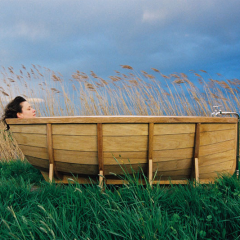
On Wednesday, July 22nd, our class visited the Victoria and Albert Museum which is also refered to as the National Art Library. I was actually late to this library visit, so I heard a little bit about its collection, and I was able to see special peices that were shown to us in small groups. The Victoria and Albert Museum has been called the world's greatest museum of art and design. This was my favorite museum because it didn't seem to have any boundaries on where art could be created. It moves beyond paintings and scultures and into a realm of fashion, architecture, and furniture. I took a very close look at one of the current exhibit, Telling Tales: Fantasy and Fear in Contemporary Design.This exhibit originated in The Netherlands and it features artists under the age of 40 trying to imbue classic storytelling into their creative peices of furniture, lighting and ceramics. The exhibit space moves from a forest glade to an enchanted castle and ends in an interpretive "heaven and hell" atmosphere. There were all kinds of clever items that invoked irony or a funny play on words.  There was a sensory deprivation chair that was shaped like a skull, making it a place to "get inside your head". There was a bathtub that was shaped like a boat, in this case a boat that is design to keep water in. I also saw the Fig Leaf Wardrobe that was designed to hold Adam and Eve's clothes with a caption that read that "the wardrobe becomes dressed when the user is not". Lastly, I had to smile when I saw the pillow cushions shaped like atomic explosions and the caption read, "embrace your fears". This is my version of smart art, the artists came up with something unique and observers like me could follow their lines of reasoning. I could not take pictures in the exhibit, but a quick image search of the exhibit, led me to the fig leaf wardrobe ( http://www.designophy.com/uploadedimages/tmn/2009/07/16/designophy_com_b3_1000000104_102.jpgand the bathboat (http://www.detnk.com/files/images/Picture%2017_22.thumbnail.png). The main posters that I saw advertising this exhibit showed a taxidermy fox with maggots coming out of its ears, the meaning of which still escapes me. One of the contributers to this collection, Wieki Somers, said that decadence is when [the lines between] tasty and unsavory, harmful and delightful are no longer discernible. I think that is an awesome definition. It's like a big peice of choclate cake that starts off tasting good, and after you've had a little bit it starts to give you a stomachache and you can't eat anymore. When we've hit decadence we've gone too far. I could go this museum many times and still not see everything that was of interest to me, hence it is the subject of one of my extra entries in this blog.
 There was a sensory deprivation chair that was shaped like a skull, making it a place to "get inside your head". There was a bathtub that was shaped like a boat, in this case a boat that is design to keep water in. I also saw the Fig Leaf Wardrobe that was designed to hold Adam and Eve's clothes with a caption that read that "the wardrobe becomes dressed when the user is not". Lastly, I had to smile when I saw the pillow cushions shaped like atomic explosions and the caption read, "embrace your fears". This is my version of smart art, the artists came up with something unique and observers like me could follow their lines of reasoning. I could not take pictures in the exhibit, but a quick image search of the exhibit, led me to the fig leaf wardrobe ( http://www.designophy.com/uploadedimages/tmn/2009/07/16/designophy_com_b3_1000000104_102.jpgand the bathboat (http://www.detnk.com/files/images/Picture%2017_22.thumbnail.png). The main posters that I saw advertising this exhibit showed a taxidermy fox with maggots coming out of its ears, the meaning of which still escapes me. One of the contributers to this collection, Wieki Somers, said that decadence is when [the lines between] tasty and unsavory, harmful and delightful are no longer discernible. I think that is an awesome definition. It's like a big peice of choclate cake that starts off tasting good, and after you've had a little bit it starts to give you a stomachache and you can't eat anymore. When we've hit decadence we've gone too far. I could go this museum many times and still not see everything that was of interest to me, hence it is the subject of one of my extra entries in this blog.
British Museum

On Tuesday, July 21, our class took "The Tube" to the world famous British Museum. A person could literally get lost in time and space in the British Museum. I was glad that we did not have an official tour and we were free to explore our own interests in this great museum. This blog will incorporate some of the things I saw, and how I was able to connect them to the experiences that I have had thus far in life.
I began my journey with the artifacts from ancient Greece. The Greek pottery was preserved in pristine condition, with the figures and colors easily identified. One of the stone sphinxes actually has traces of the deep red pigment that it had hundreds of years ago. The artifacts reminded me of the animations from Disney's Hercules, which is one of my favorite animated Disney movies.
I began my journey with the artifacts from ancient Greece. The Greek pottery was preserved in pristine condition, with the figures and colors easily identified. One of the stone sphinxes actually has traces of the deep red pigment that it had hundreds of years ago. The artifacts reminded me of the animations from Disney's Hercules, which is one of my favorite animated Disney movies.


There were many Grecian artifacts that displayed the human form, especially the balance and proportions of the male figure. One of my favorite sets of statues were the Three Nereids or sea nymphs because the sculptures were so beautiful. These pieces were so detailed that I could see the thin water or wind swept clothes that adorned the bodies of the goddesses.

I also spent time in the ancient Egyptian exhibit, especially being that close to hieroglyphics. The writing on King Ramses II's arm reminds me of the tattoos that many of my peers are getting. Speaking of tattoos, I have a small ankh on my back, and it was moving to see that symbol used to express thoughts thousands of years ago.

Finally, I fought through the crowds to get a good look at the Rosetta Stone. Before this trip, I knew more about the Rosetta Stone has a commercial device to aid in language acquisition, but now I know better. This stone which was acquired by the British Museum in 1802 allows us to understand the past in its own words. I am impressed by the sophistication of early civilizations and I am glad that the British Museum is taking such good care of this international treasure.

Although many of the artifacts were intact at the British Museum, other pieces were in fragments, with the accompanying pieces in other museums in places like Copenhagen, Wurzberg, and Athens. For example, one of the legs from an Apollo statue is at The Lourve in France. Another consequence of broken artifacts is that the curators could not definitively state what the figures were depicting. The British Museum is the perfect example of how decisions to preserve materials and educate the public can be very controversial.
Before I came to London, my colleagues in library school were telling me how evil the English empire was for stealing from its colonies and never returning the loot, and I was anxious to see how the British Library would frame its position. As a museum patron, I walked through the ancient Greece portion of the museum, and at the end there is a hallway that explains the controversy and why the museum feels justified. The British Museum paints Lord Elgin as an important figure who spared the pieces from pollution, weathering and vandalism.
Before I came to London, my colleagues in library school were telling me how evil the English empire was for stealing from its colonies and never returning the loot, and I was anxious to see how the British Library would frame its position. As a museum patron, I walked through the ancient Greece portion of the museum, and at the end there is a hallway that explains the controversy and why the museum feels justified. The British Museum paints Lord Elgin as an important figure who spared the pieces from pollution, weathering and vandalism.

The explanation also says that Elgin also connected Grecian society to other ancient societies in the context of the museum. Lastly, it is impossible to return the materials to their original state, so they are ultimately better off in the British Museum. Although I was happy to see these artifacts in one pristine and inclusive exhibit, I do think that the only context that really matters for these pieces is the original context. As Grecian people are piecing their legacy together, I believe that they should have control over the artifacts that their ancestors created. I know that returning artifacts to their original owners would unleash a brand new set of concerns, but that is my stance as an emerging librarian.
Greenwich National Maritime Museum Library

On Monday, July 20, our class took a boat down the River Thames to the Greenwich National Maritime Museum Library (http://www.nmm.ac.uk/visit/). We spoke with Hannah, the archive and manuscript librarian, who shared a lot of useful information with us. It makes sense that this library would be in existence since 1937, in a country with such a strong sea presence. The library has public funding as well as private. The entrance to the reading room is a rotunda, named after the founder of the library, whose donations provided the basis of the collection, Sir James Caird.
The use of this library is free to the general public, but the users do have to be over the age of 16.The library boasts over 8,00o items in the Rare Books collection and the largest collection of navigational charts and maps. People utilize this library for information on immigration, genealogy, navigation, piracy, astronomy, voyages, exploration, Merchant and Royal Navy, as well as naval architecture. This library has 3,000 to 4,000 visitors every year, and 16,000 to 18,000 virtual visitors who utilize the electronic library and online public access catalog (OPAC).
The use of this library is free to the general public, but the users do have to be over the age of 16.The library boasts over 8,00o items in the Rare Books collection and the largest collection of navigational charts and maps. People utilize this library for information on immigration, genealogy, navigation, piracy, astronomy, voyages, exploration, Merchant and Royal Navy, as well as naval architecture. This library has 3,000 to 4,000 visitors every year, and 16,000 to 18,000 virtual visitors who utilize the electronic library and online public access catalog (OPAC).
We also learned that the Maritime Library utilizes MARC and AACR2 cataloging standards that have been heavily adapted to suit their collection, they also in corporate archive and museum metadata standards This library used to be open 6 days per week, but now that it is undergoing massive renovations, it will only be open for 3 days out of the week. By 2011, or 2012 at the latest, the library should return to its regular operating hours, and it will be improved with a new reading room and enhanced storage facilities.

As other members of the library staff took time to show us some of the more unique pieces in the manuscript and rare book collection, some items really stuck out to me. The museum has an original signal book, a book that sailors use to describe all of the codes and flags that they use to communicate, this would have been thrown overboard in the event of a battle. If one was recovered by an enemy, the whole system would have to be re-invented. There were letters from the Lord Nelson as he was working to prevent a mutiny in 1757. There was written proof of how easily a privateer could be swayed toward piracy.
There are even carefully drawn maps that depict California as an island, which gives us a great idea of how these sailors viewed the world. One of the more remarkable pieces are Cree's journals which detail his experience with a narrative and water color illustrations. One of the librarians mused that life out in the sea left much to the imagination, there is nothing more to do than to write, draw and look into the sky. If such thoughtful and meaningful artifacts can result from this lifestyle, I think we should all give it a try sometime.

Shakespeare Library and Archive

On Friday, July 17, our class took a coach bus to Stratford Upon Avon to visit the William Shakespeare Centre Library and Archive (http://www.shakespeare.org.uk/). This collection was first established in the 1800's in conjunction with the public records office. In 1964, the building and the official mission to mold a library that would encompass William Shakespeare's life, work, and sources, was created. This library surprised me with its scope, although its focus is Shakespeare, it contains materials that Shakespeare might have referenced for his work including public records that illustrate the city happenings during his lifetime and the various interpretations of his work, from then until now.

The Royal Shakespeare Company has a performance and image database that can be accessed through this library. The public records aspect is a great resource for people who are trying to trace their family geneaology. This library is not publicly funded, its function is dependent on charity monies and donations from individuals. Although everyone is welcome to visit the library, some of the extremely old documents are off limits to most people unless they have proof that the access is neccessary for faculty approved research. Even with special access, no patrons may remove materials from the library, it is for reference only.
The library has 12 staff members, only 5 of them are full time, and it boasts about 50,000 books in its collection. The librarians are very passionate about what they do, and they make a point to share the treasures of their colelction with theatre students, school children and the general public as often as they can, with respect for the delicate nature of some materials.

One special piece of this collection is one of Shakespeare's first folios, which was printed in 1623, seven years after he died. There are only 230 of these still in existence of the 750 that were initially printed. The library also houses 250,000-350,000 photographs of sets, costumes, and actors. As we were touring the vault, we noticed some black and white still shots of Helen Mirren portraying Cleopatra in one of the RSC productions. Here is another image of Mirren in this role

(http://www.rsc.org.uk/picturesandexhibitions/images/from_xml/women/I_82_T884_97_c.jpg) The environment in the Shakespeare Library is very attuned to the pursposes of any given patron, one picture especially caught my attention. There is a painting of William Shakespeare between the muses, who are appropriately adorned and named, comedy and tragedy.
The British Library

On Thursday, July 16, our class took the "Tube" to the King's Crossing Station to visit the U.K.'s national library, named the British Library. The British Library is third in national library collection size behind the Lenin Library in Moscow and the Library of Congress in the United States. There are 2300 people on staff at the British Library and their task is to acquire everything published in England, preserve it and make it available to researchers. the library contains materials in every language in the world, and there is a librarian who is proficient in each of them.
The main British Library site in London is designed to look like a naval ship, cost 450 million pounds to build, and 36 years (1961-1997) to complete from inception to full function. There are 170 million items in the collection, and the number is constantly growing. It is estimated that if a person were to read 5 items per day, everyday, it would take him or her 80,000 years to get through the collection!
Since the majority of the library's collection is stored in stacks, 75 feet under the building, library patrons have to request materials and the staff members along with an intricate electronic system will retrieve the materials. To be eligible for a "Reader's Pass" one must submit the appropriate identification, a brief bibliography and explanation of what is being sought, as well as getting one's picture taken for the pass. The library has issued about 600,000 Reader's Passes since it opened in 1997, and there are about 114,000 "live" readers at the moment. There are 11 different reading rooms that are identified by subjects studied there for library patrons to take advantage of.
Since the majority of the library's collection is stored in stacks, 75 feet under the building, library patrons have to request materials and the staff members along with an intricate electronic system will retrieve the materials. To be eligible for a "Reader's Pass" one must submit the appropriate identification, a brief bibliography and explanation of what is being sought, as well as getting one's picture taken for the pass. The library has issued about 600,000 Reader's Passes since it opened in 1997, and there are about 114,000 "live" readers at the moment. There are 11 different reading rooms that are identified by subjects studied there for library patrons to take advantage of.

There are 50 mechanical book handling rooms throughout the library, which are all equipped with the automated book retrieval system (ABRS) that work with conveyor belts and optical scanning which move the materials from the stacks to the patrons. There are 22,000 possible routes that an item can go through with the ABRS, and the system is sophisticated enough to avoid any points of congestion in any given route. The British Library goes through a pretty standard acquitisiton process, except when it comes to the classification or shelving system. The librarians place the books by size, in order to conserve the most amount of space, since the book location is scanned as soon as it is entered, it is possible to retrieve a book about dogs, even if it is amidst Russian dictionaries. This system was designed by Antonio Panizzi, and it is a great example of making a decision based on an organization's specific needs, rather than generally accepted practices.
Some of the unique highlights of the library include the Glass Tower, the treasures of the British Library and the 400 year old Dutch Atlas on display. The prominently displayed Glass Tower are the shelves that contain 10,000 bibliographic items that King George III donated to the library for public use in 1820. The treasures of the British Library Johannes Gutenberg's first printed bible, the original copy of the Magna Carta and the Codex Sinaiticus, the oldest handwritten complete version of the Christian Bible, which is at leasat 1600 years old. The book of Dutch maps from the 1600's is about 5 feet tall and 3 feet wide and it locked in a glass case, it is a marvel to behold even in this restrictive state.


Our tour guide, Mr. Kevin Mehmet was wise enough to leave us to ponder the questions that are on the horizon for this institution and the profession as a whole. It is clear that the antiquated printed materials in the collection are still readable today, is the same true for some our recent digital publications? As we move into the digital age, how will we preserve the materials and protect the rights of the creators. By 2012, the British Library hopes to have 400,000 items digitized to increase access for its patrons. This also anticipates that paper publications will be significantly reduced by 2020. Although the increased digitization will inevitably change the way we think about managing data, the British Library, as shown by jam packed hallways and reading rooms, serves a function that seems to always be necessary.

Museum of London
On Wednesday, July 15, our class took the Tube to the Museum of London. There are about 400,000 people who visit the The Museum of London every year and it is best described as a place that displays the entire history of London. Right now, the museum only included exhibits from pre-history until the 1550's because the ground floor is being renovated.
Our tour guide, Jon Cotton, was one of the curators for the pre-history portion of the museum, and he was quick to point out that pre-history is more than the Romans, Saxons and Vikings, and it most certainly is not the times of the dinosaurs. Mr. Cotton encouraged us to think of the inhabitants of pre-historic London as intelligent and creative individuals who were able to survive in conditions that most of us could not even imagine.

The pre-history portion of the Museum of London is designed to make visitors think of four major elements, they are the Thames River, Climate, People, and Legacy. The Thames River is the reason that ancient and contemporary people flock to London, and it was represented by a blue lights glowing through the glass cases that held the pre-historic artifacts, many which were dredged from the river over time.
Climate change and the atmosphere were responsible for many of the population patterns in the London area, and the details were described in the exhibit captions. The concept of "ancient people as individuals" was illustrated by the human remains that were spatially grouped with objects that exemplified their individual trades or passions. There were humans who made weapons and tools out of flint and rocks as well as glass beads and various other items. The legacy was described as, "the history beneath our feet" and one example of it was the digital diorama which creatively depicts a pre-historic settlement that is now the site of Heathrow Airport.
Although the pre-historic portion of of the Museum of London was the focus of our lecture, there were many other exhibits available in the museum. I spent time wandering through the London as a Roman settlement exhibit, the Great Fire of 1666 exhibit, and the Plague and Medieval era exhibits. However, nothing could prepare me for the exhibit on Britain's involvement in the movement to end Apartheid in South Africa, during the late 1980's. There were posters that urged British citizens to boycott South African goods, not including South African cricket teams, and a large benefit concert in Wembley stadium featuring Stevie Wonder.


Our tour guide, Jon Cotton, was one of the curators for the pre-history portion of the museum, and he was quick to point out that pre-history is more than the Romans, Saxons and Vikings, and it most certainly is not the times of the dinosaurs. Mr. Cotton encouraged us to think of the inhabitants of pre-historic London as intelligent and creative individuals who were able to survive in conditions that most of us could not even imagine.
The pre-history portion of the Museum of London is designed to make visitors think of four major elements, they are the Thames River, Climate, People, and Legacy. The Thames River is the reason that ancient and contemporary people flock to London, and it was represented by a blue lights glowing through the glass cases that held the pre-historic artifacts, many which were dredged from the river over time.
Climate change and the atmosphere were responsible for many of the population patterns in the London area, and the details were described in the exhibit captions. The concept of "ancient people as individuals" was illustrated by the human remains that were spatially grouped with objects that exemplified their individual trades or passions. There were humans who made weapons and tools out of flint and rocks as well as glass beads and various other items. The legacy was described as, "the history beneath our feet" and one example of it was the digital diorama which creatively depicts a pre-historic settlement that is now the site of Heathrow Airport.
Although the pre-historic portion of of the Museum of London was the focus of our lecture, there were many other exhibits available in the museum. I spent time wandering through the London as a Roman settlement exhibit, the Great Fire of 1666 exhibit, and the Plague and Medieval era exhibits. However, nothing could prepare me for the exhibit on Britain's involvement in the movement to end Apartheid in South Africa, during the late 1980's. There were posters that urged British citizens to boycott South African goods, not including South African cricket teams, and a large benefit concert in Wembley stadium featuring Stevie Wonder.


I read what South African and British scholars had to say about the daily degradation of living in such a system and the fury at the loss of the movement's leaders to false imprisonment, beatings and executions. There was even a video with headphones so that museum visitors could listen to a speech from Nelson Mandela, after he was released from prison in 1990. The impact of this exhibit was two fold for me. For one, I am amazed at what was happening in the world during my lifetime.


When we spend so much time learning about ancient history, we may forget how fresh many of the world's wounds truly are. Secondly, I am genuinely impressed by the international pressure that the United Kingdom was willing to put on a country for human rights violations, I don't see that type of resolve with the international human rights issues that we face today. I valued my visit to the museum because it enormously enhanced my learning, sitting in a classroom is one thing, but walking within, reading and talking about, listening to, and touching the material is quite another.
Subscribe to:
Posts (Atom)


)